The G-100 patient gown, made in the USA

Comfort meets dignity, engineered for care.

Hospiva designs and manufactures a patented hospital gown that gives clinicians access to lines, leads, and ports without exposing the patient. Reusable, domestically made, and supplied by a WBENC-certified, women-owned company.

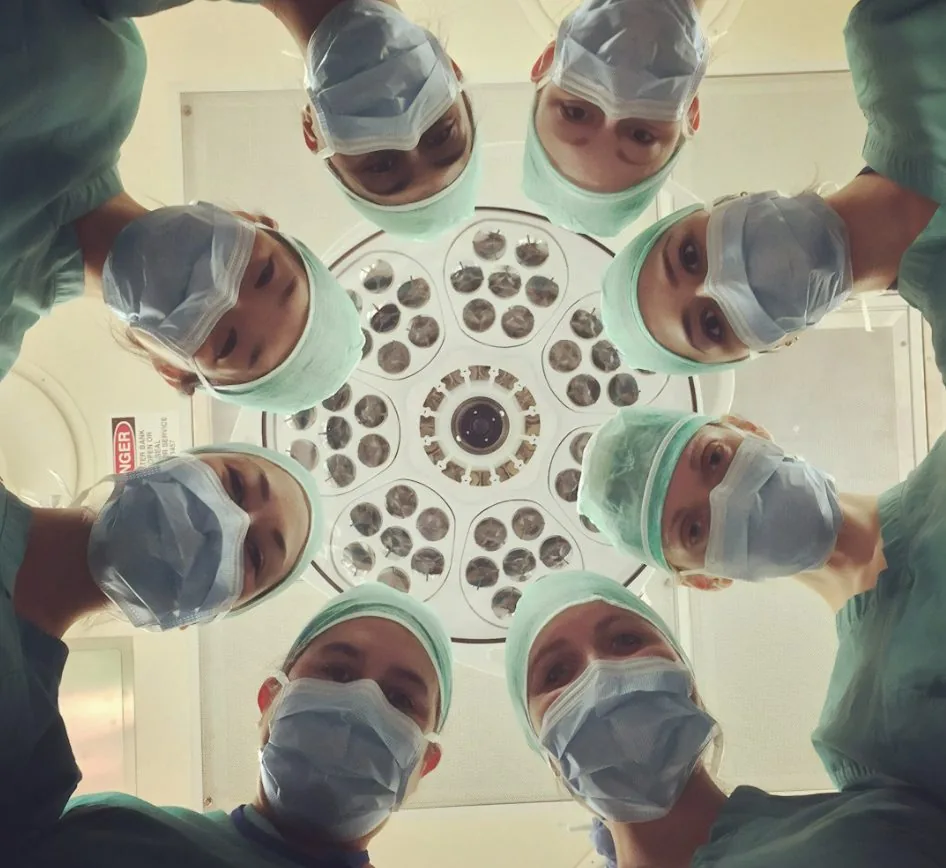
A surgical care team looking upward together beneath an operating room light, viewed from below in a circular formation.
Care team, in formation
  • WBENC certifiedWomen's Business Enterprise, certified by the Women's Business Enterprise National Council
  • Women-ownedFounded and led by a PhD health-program administrator and a critical-care RN
  • Made in the USACut, sewn, and woven domestically from 100% domestic raw materials
  • U.S. Patent D1,147,668Protected gown design, with a cross-functional access system, front portal, and full-open closures
  • D-U-N-S 14-486-8776Listed with Dun & Bradstreet; FDA device registration and listing in process

The G-100: one gown, every access point.

A cross-functional gown that streamlines IV and line access, secures telemetry devices, and keeps personal items close, with front and rear hook-and-loop closures for full clinical access and full privacy.

G-100 patient gown technical drawing showing front and back panels with 3/4-inch hook-and-loop closures on the wearer's left and right for front closure, front pockets, hook-and-loop closure at the shoulder, and a mid-to-bottom center-back opening.
Fig. 1: G-100 signature gown, front and back — U.S. Patent D1,147,668Specification sheet on request
  • Front portal

    Streamlined access for IV lines, central and PICC lines, and dialysis ports, without disturbing the gown or the patient.

  • Front hook-and-loop closure

    Opens for clinical access during procedures and diagnostic imaging, then closes fully for patient privacy.

  • Secure pockets

    Keep telemetry instruments and personal items such as eyewear and hearing aids close at hand and off the bedside table.

  • Shoulder closure

    A secure, adjustable hook-and-loop closure at the shoulder that holds through movement and patient transfer.

  • Center-back opening

    Mid-to-bottom rear access with hook-and-loop closure, giving full provider access without full undress.

  • Loop system

    Secures foley bags and personal items in place, reducing tangling and freeing hands for care.

Fabric
55% cotton / 45% polyester100% domestic raw materials, chosen for softness and repeated institutional laundering
Closures
Hook-and-loop, front and rearFull-open for procedures and imaging, fully closed for coverage
Patients
Adult, all levels of careSuited to limited mobility, fall risk, isolation precautions, and frequent line or telemetry access
Origin
Made in the USACut and sewn in Arkansas; fabric woven and printed in Pennsylvania

You didn't become a nurse to negotiate with a gown.

Every shift asks you to move fast and treat gently: start a line without a delay, check a dressing without a struggle, keep a frightened or confused patient covered and calm, all while the clock is already against you.

The standard hospital gown was never designed with any of that in mind. It was designed to be cheap to produce and easy to launder. Everything it costs you, the extra hands, the improvised opening, the moment a patient is exposed longer than they should be, was never anyone's problem to solve.

Jennifer Osby works at the bedside in cardiac and critical care, and she designed the G-100 from those shifts. The portal that lets you reach a line without unwrapping a patient. The closures that open fully for a procedure and close completely afterward. The pockets that keep a telemetry lead from disappearing into the sheets. Each one is a specific moment she needed the gown to do something it couldn't.

Hospiva wasn't built to look better in a hospital lobby. It was built so that the fastest way to reach a patient is also the most respectful way, so speed and dignity stop being a trade-off you manage on your own.

For procurement and supply chain

What buyers need to evaluate the G-100, and how purchasing works.

Evaluate

Request a specification sheet and evaluation samples for your nursing council or value analysis committee.

  • Fabric composition and country of origin
  • Closure and access-point details
  • Care and institutional laundering guidance
  • Certification documents and D-U-N-S

Pilot

Trial the gown on a unit where line access and telemetry are constant, such as cardiac, critical care, step-down, or dialysis, and measure what changes.

  • Time to line access and dressing checks
  • Exposure moments during transfer and imaging
  • Nurse and patient feedback

Purchase

Hospiva contracts directly with hospitals, clinics, and health systems and works within your supplier onboarding process.

  • Direct purchase with volume pricing
  • Counts toward Tier 1 diverse supplier spend
  • Domestic supply chain, no import dependency

A certified diverse supplier, built by the people who know the bedside.

Hospiva Medical is owned and led by two women: Vivian Gallman-DeRienzo, PhD, who spent thirty years building nursing and health programs in higher education, and Jennifer Osby, MEd, BSN, RN, a practicing cardiac and critical-care nurse who designed the G-100 from her own shifts.

We are certified by the Women's Business Enterprise National Council (WBENC) as a Women's Business Enterprise and listed with Dun & Bradstreet. For health systems with supplier-diversity commitments, purchases from Hospiva count toward Tier 1 diverse spend, and our domestic manufacturing partners keep every dollar in the U.S. supply chain.

Supplier diversity officers can request our capability statement, certification documents, and NAICS codes through the form below.
WBENC Women's Business Enterprise certification badge
Certification
Women's Business Enterprise (WBENC)
Ownership
Women-owned and led
D-U-N-S
14-486-8776
Headquarters
Florence, South Carolina
Manufacturing
United States
A row of white hospital gowns hanging on a garment rack, backlit by a window.

Built here, for here.

A nation's care for its people begins with what it is willing to manufacture for them. Every G-100 is cut, sewn, woven, and printed in the United States by partners we name, so the supply chain behind the gown is as accountable as the gown itself.

A hospital gown is often the first thing that tells a patient they are no longer in control. We built Hospiva to change what that garment says.

Hospiva exists at the intersection of medical device engineering and textile design, treating the hospital gown as what it actually is: a piece of equipment worn by a person at their most vulnerable. Every seam, closure, and fabric choice is made twice, once for the clinician who needs fast, reliable access, and once for the patient who needs to feel like themselves.

Comfort

Worn like clothing, not endured like equipment. Soft-hand textiles and considered construction reduce the physical reminder of illness.

Dignity

Coverage that respects the person inside it, designed to minimize exposure during transport, ambulation, and daily care.

Access

Assessment access engineered into the garment itself, not improvised at the bedside.

Durability

Manufactured to last, not to discard. Materials and construction chosen to withstand institutional laundering cycles.

Leadership

President & Chief Executive Officer

Vivian Gallman-DeRienzo, PhD

Thirty years in higher education administration, with a focus on developing nursing and health programs, accreditation, and industry partnerships. Served on a presidential delegation creating RN-to-BSN programs in Malaysia, Mongolia, and China; a Fulbright expert with executive leadership credentials from Harvard University and the American Council on Education. Based in Florence, South Carolina.

Vice President & Chief Innovation Officer

Jennifer Osby, MEd, BSN, RN

The designer of the G-100 and a practicing cardiac and critical-care nurse. Her work at the bedside is where the design comes from — a working knowledge of what patients and providers need from a gown, confirmed by hundreds of conversations with colleagues. Based in Charlotte, North Carolina.

Vice President & Chief Strategy Officer

Lamar Younginer, BS, MS

More than two decades in strategic planning, business growth, and technology across higher education and organizational strategy, including founding College Intel Advisors. Leads Hospiva's growth, partnerships, and technology strategy. B.S. in Economics, Francis Marion University; M.S. in E-Business, Capella University.

Frequently asked questions

What clinicians, procurement teams, and supplier-diversity officers ask most.

What makes Hospiva gowns different?

The G-100 is built differently from the standard gown at every level, not just the fabric, but who designed it, who owns it, and how it's protected and verified:

  • 100% manufactured in the USA. Every gown is cut and sewn domestically, not imported and relabeled.
  • Designed by a PhD and a practicing critical-care nurse. Grounded in formal research into gown design and current hands-on patient care, not a fashion redesign applied after the fact.
  • Designed and owned by women. Hospiva is women-led and women-owned from the founding design through the leadership.
  • Patented design. The G-100 is protected by U.S. Design Patent D1,147,668, issued by the United States Patent and Trademark Office.
  • FDA registration in process. Hospiva is completing FDA device registration and listing, the regulatory step that formally records the gown as a medical device prior to full market distribution.
Are the gowns suitable for all patients?

Yes. The G-100 is engineered to accommodate a wide range of patients, including higher-acuity and higher-risk populations such as those with limited mobility, fall risk, isolation or infection-control precautions, and frequent line or telemetry access, without asking any one group to sacrifice comfort, safety, or dignity. The adjustable closures and cross-functional access points are designed to work across body types and levels of care.

How do the access points work?

The gown features multiple dedicated access points, including the front portal for IV connections, central and PICC lines, and dialysis ports, so a clinician can reach what they need quickly without removing or repositioning the gown. Front and rear hook-and-loop closures open fully for procedures and diagnostic imaging, then close completely afterward, so access never comes at the cost of the patient's privacy.

What materials are used for the gowns?

Hospiva gowns are made from 100% domestic raw materials, a 55% cotton / 45% polyester blend chosen for breathability and softness against the skin, combined with the durability needed to withstand repeated institutional laundering cycles.

Where are Hospiva gowns made?

Hospiva gowns are manufactured by American Stitchco in Mountain Home, Arkansas. The fabric is custom-made by AKAS Textiles & Laminations, a manufacturer of Made-in-America textiles in Bensalem, Pennsylvania. The print design is provided by Little Cocalico, a sustainable custom fabric printing company in Ephrata, Pennsylvania.

Is Hospiva a certified diverse supplier?

Yes. Hospiva Medical is certified by the Women's Business Enterprise National Council (WBENC) as a Women's Business Enterprise and is owned and led by two women. Purchases from Hospiva can be counted toward Tier 1 diverse supplier spend. A capability statement and certification documents are available on request.

Bring the G-100 to your care teams.

Tell us about your organization and what you need. We reply directly, usually within one business day.

Samples, pricing, specification sheets, capability statements, and pilot planning all start here.

Email: info@hospivamedical.com
Hospiva Medical, Florence, South Carolina